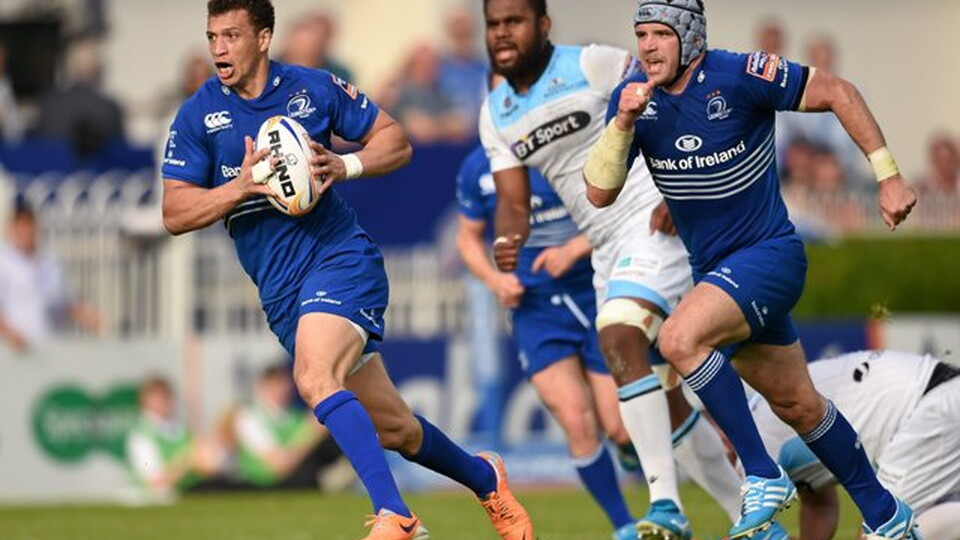
Leinster’s Head Performance Nutritionist Daniel Davey with the first article in a two-part series on nutrition best practice in preparation for games and during recovery.
Fuelling up for peak performance on match day
With the rugby season getting underway in a few weeks, it seems appropriate to discuss nutrition best practice in preparation for games and during recovery in the context of team sports. To keep the information as specific as possible this will be a two-part series. Today’s article will deal with nutrition preparation for games, and next week’s article will deal with optimum nutrition for recovery.
Most athletes are aware that nutrition is vitally important for peak performance in game situations. However, many do not know what to eat, how much to eat and when to eat it in the lead-up to games. Although coaches, trainers and players have many different nutrition approaches and beliefs about what athletes should eat, the primary nutrition goals in the lead-up to games is to maximise energy stores with appropriate foods and to ensure you are well-hydrated.
Carbohydrate in particular is the main macro-nutrient that athletes must consume in the lead-up to games as it is the primary source of energy the body relies on during high intensity exercise. While you may have heard recent reports about the potential benefits of low carbohydrate diets in various aspects of health and training, there is still no compelling evidence that such approaches are appropriate for performance in high intensity sports.
Carbohydrate
Nowadays, most athletes are well aware that carbohydrate intake is important for matches and training. Despite the general acceptance that athletes should maximise carbohydrate stores in the lead-up to games, in my experience many athletes do not eat sufficient amounts of, or the right type of, carbohydrate-rich foods in the preparations for games.
Consuming a high carbohydrate diet has repeatedly been shown to improve exercise performance by limiting fatigue and maintaining energy levels. Carbohydrate stores within the body (something known as “glycogen” in the muscle tissue and liver) are relatively limited in supply and must be topped up after each training session. Planning and preparation of appropriate carbohydrate meals is therefore an essential part of an athlete’s routine in preparation games. The process of fuelling up for games is commonly known as ‘carbohydrate loading’. In simple terms, the strategy is that training sessions will be tapered (shortened) in the few days leading up to a game, whilst the athlete will eat a large amount of carbohydrate (more than they usually would day to day) to store as much glycogen in the liver and muscles as they can.

Choosing the right foods
When choosing appropriate carbohydrate-rich foods, the focus must be on slow-digesting foods that provide a sustained amount of energy to the body. Because there is a greater requirement for carbohydrate at these times, and because many convenience foods are rich in carbohydrate (e.g. cereal bars, wraps, soft drinks, jellies, etc), many athletes are tempted to treat these periods as a convenience food free-for-all. Given that preparation and recovery are spread over three days of the week, clearly spending almost half of the time eating substandard food choices will not be appropriate for athletes with body composition goals. For those athletes struggling to consume their target for carbohydrate, in this case fruit juices and smoothies are an easy way to consume a greater volume of carbohydrate.
Although the main emphasis is on carbohydrate foods, a moderate amount of protein should also be included with meals. Protein will help to slow the digestion of meals that are based heavily around carbohydrate foods, and will also supply essential amino acids that are important for mental focus and recovery afterwards. Chicken, lean beef, pork fillet, white fish and lamb are good protein options often favoured among athletes.
Examples of suitable carbohydrate foods
| Cereals | Fruit | Dairy Products |
| Oats Home-made granola Home-made muesli Buckwheat flakes Quinoa Brown rice White rice Bulgur Millet |
Apples Bananas Blueberries Oranges Mango Pineapple Peaches Plums Melon Grapes Kiwi Grapefruit Cherries Dates |
Low fat milk Natural yoghurt |
| Vegetable | Juices | Other options |
| Potato Sweet potato Yams Beetroot Carrots Parsnip |
Apple juice Orange juice Beetroot juice Cherry juice |
Nut and seed bars Home-made granola bars Home-made flapjacks Dried fruit Fruit smoothie |
Timing
Nutrition preparation must take place far in advance of the game – a fact that is not always appreciated. If an athlete has not consumed sufficient fuel in the 36-48 hours prior to the day of the game, they will not be able to compensate for the energy deficit by eating an enormous pre-game meal (and you would be surprised how many times I have seen this happen!). Hence, getting your nutrition preparation right in the lead-up to the game is vitally important.
The aim should be to plan your nutrition strategy based on the time of the match. Most games are played at the weekend either on a Saturday or a Sunday in the evening or afternoon. If a game is on a Saturday evening most teams will train two days before on the Thursday evening. In this case, you should increase your energy and in particular your carbohydrate intake immediately after training. Your first post-training meal (within 30 minutes) should contain a fast-digesting source of carbohydrate and protein, i.e. a flavoured milk, followed by a nutritionally-balanced meal like home made shepherd’s pie with lots of root vegetables. The Friday before the game is particularly important for maximising carbohydrate stores as this is the day when you will consume the majority of energy and carbohydrate-based meals, spaced out nominally into three main meals and three snacks.
Amounts
The amount of carbohydrate required in the lead up to a game will depend on the length and intensity of the game. For professional rugby players the requirement may be > 8g of carbohydrate per kg of body mass for carbohydrate loading. This equates to 640-800g per day for an 80 kg player. A simple way of looking at it would be to add two extra carbohydrate meals on top of your typical food intake (usually six meals as outlined above).
For example, two extra meals could be (i) a bowl of porridge with some chopped banana and (ii) a fruit smoothie with honey. If you wanted to be more specific and ensure you are meeting your target for carbohydrate, you could log all the food you eat on an smartphone app, or simply record it in writing and add it all up based on estimated amounts from the nutrition information provided on the label. That way, going forward you will be able to practice your carbohydrate loading and plan your meals around this for games. That would a practical way of knowing how many meals and what volume of food you need to eat.
Game day
On the day of the game the majority of your fuelling should already be taken care of, and it should be a matter of topping up your fuel stores with lighter, easy to digest meals. If your game is in the afternoon, you should get up early and start your day’s fuelling by having a medium to large breakfast based around carbohydrate foods. The meals should be low in fat, low in fibre and contain a slow-digesting source of carbohydrate – a bowl of porridge fits the bill nicely here.
If the game is in the afternoon, your breakfast should be your largest meal. Your stomach should be more or less empty come throw-in/kick-off, and for this reason your last meal should be 3 to 4 hours before the game. The meal should be easy to digest, so fat, lots of protein and high fibre foods like vegetables should be limited. Pasta and chicken has traditionally been one of the most common pre-match meals, but in my experience athletes often feel better prepared by eating a rice and chicken dish, or a cous cous salad with chicken as these are much lighter options that pasta.
It has become common practice for athletes to consume jellies, energy drinks, and high-energy snacks like Jaffa Cakes in the hours immediately prior to a game, but if carbohydrate stores have been filled through appropriate carbohydrate loading and the pre-match meals, this is not necessary. Nonetheless if an athlete feels hungry or habitually consumes a specific light snack like two Jaffa Cakes, and feels better by having it in the 1 to 2 hours before the game, then that is perfectly fine.
Conclusion
That concludes this week’s article – a very brief summary of the nutrition preparation required for team sport performance. Carbohydrate is the most important macronutrient in the lead-up to the game with the main aim to increase carbohydrate consumption in the 48 hours before a game. On game days, the key focus is simply topping-up carbohydrate stores with light, easy to digest meals, and ensuring you are well hydrated. If the approach of carbohydrate loading in the days before games is not something you have tried before, I would encourage you to practice it in the lead-up to a training game. That way you will begin to understand what works best for you. If you give time and consideration to your pre-game fuelling, it will ensure you are ready to consistently perform at your best.
Check out @FoodFlicker on Twitter and Facebook for healthy meal ideas!