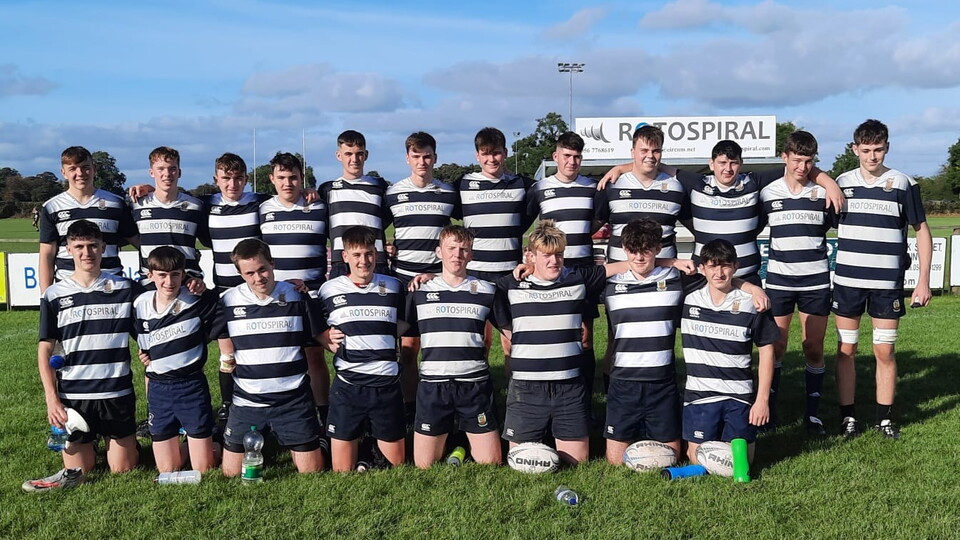
Kilkenny RFC is a family club, steeped in tradition, it is a club built on passing the baton to the next and making sure the club is in a better place for the next generation of players and members.
The club have produced many international players including Ian Dowling, Caroline Mahon, Gary Halpin, Gabriel Fulcher, Ronan Kearney, Willie Duggan, Ned Byrne, and Jack Notley, furthermore, Munster and Leinster stalwarts, Mick Galwey and Chris Pim, both played for the club.
Other internationals to have played for the club include current first team players Liam Caddy (Barbados), and Jake Partley (Finland), past players Toby Messener (Germany) and Brian Desmond (Bermuda).
In recent years the club have had success at producing underage capped internationals, most recently Irish U-20 out-half, Tim Corkery, Irish youth players Conan Dunne, Ben Devlin, Sean Moran, Colm Brady and Gavin Naywata.
The club are also delighted to have been recognised as a ‘Club of Origin’ by the British and Irish Lions, with whom, the great Willie Duggan toured New Zealand with in 1977
In the context of sporting recognition, Kilkenny is better known for their exploits in hurling. With 36 senior All-Ireland championships to their credit, the county is the most successful in Ireland, and therefore, is the most popular sport in the county, with participation across all age groups very high.

However, through hard work and focus, Kilkenny RFC have made the best of the situation. Club Community Rugby Officer (CCRO) for Kilkenny RFC, Noel Devlin, maintains a strong presence in local primary schools, promoting the game and encouraging boys and girls to participate in minis and youth rugby with the club.
Noel deserves further kudos as, in 2021, through persistence he convinced Callan CBS to form a competitive side, they recently entered the South East Rugby 3A SCT Qualification Blitz. This can be seen as a significant milestone for rugby within the county, it is hoped that this is the catalyst for more to follow.
In 2019, the Loretto Convent formed a girls team, this has proved a significant step in creating a positive environment around girls rugby locally. The objective and focus needs to remain for the larger city schools where most of the clubs’ youth players attend, to engage in a rugby development programme.
Despite the difficulties and schedule conflicts with other sports, the club has maintained high participation across all age grades. Under the guidance of mini’s co-ordinator, George Maher and club secretary, Vinny O’Shea, the club boasts one of the strongest provincial minis sections.
The minis section caters for over 400 boys and girls, from U-6 up to U-12, such is the popularity that the club have been forced to schedule minis into three time slots, every Sunday morning, from 9.30 to 13.00.
Next in line is the club’s youth system, again the club field in all age categories from U-13 up to U-18.5, in both boys and girls. Though winning cups is important, for the club, success goes beyond winning youth trophies, in fact it is observed as short-term success.
What is important, in the long-term, is that players are developed from an early age to have the relevant skills to succeed and progress to adult rugby with the club.
Long serving youth coach and 1986 Towns Cup winning captain, Mick McGrath, now in his 27th year of youth coaching offered an insight into the clubs philosophy: “We strive to create a safe playing and fun environment for boys and girls and help them to learn new peer-to-peer and sporting skills. Our objective is to develop and upskill all young players as individuals, subsequently allowing the team to develop automatically. Young people physically develop at different stages, a big U-13 player might end up being an average sized U-18.
“Therefore, by improving knowledge, playing skills and peer-to-peer skills, by the time players are physically developed they will have the range of attributes required to allow them to succeed post-youth competition and transition appropriately into adult rugby.”
Despite the best intentions of coaches and the club, the progressive fallout through the age group remains, with a number of dropouts from year to year, particularly from youth to adult rugby. The club has worked hard to ensure the situation improves, for instance, in 2015, the fallout after U-18 was above 80 per cent, to the contrary, the last two seasons has seen this reduced to 60 per cent with many U-18s, including Conor Walsh, Dan Dowling, Niall Reid, Jack Walsh, Rob Boyd and many others progressing through to adult rugby.
In a recent round of Leinster League, both first and second squads contained a combined total of 35 players out of 44 who came through youth rugby with the club. This offers significant evidence that the youth strategy is working and signs suggest it will improve in the coming seasons. To substantiate this, the club had the highest combined representation, 11 players, in this year’s South East Area squad selections for the U-16 and U-17 Shane Horgan Cup.
From the U-16 squad selected players included Hugh Greany, Marcas Bowen, Jamie O’Brien, Daniel Ring, Mark Power, James Coogan and Zac Evans, while the U-17 side included Donal Kealy, Sean Dunne, James Hughes, Sean Roberts and Ruaidhri Galwey, son of ex-Ireland, Munster and Lions player, Mick.
At adult level the club is maintaining status in Leinster League Division 1A, player/coach David O’Connor and his coaching team, Steve Ashmore, Ray Pembroke, John Bukley and Mark Coughlan, have a strong deck of homegrown and recruited players to pick from.
O’Connor, a local lad, was given his first XV debut in 2006, by ex-Leinster player and then coach, Mick O’Neill, incidentally the side was captained by another ex-Leinster player, Pat Holden and contained stalwarts, Neil Campion, Denis Brennan and Barry Daly, who today is heavily involved in underage coaching in the club.
Despite some brief absences, where he played AIL with Old Wesley, professionally in Canada and then took charge of the Finland national team, O’Connor has been a mainstay and driving force of adult rugby in the club ever since. The current first side is cast in Kilkenny rugby tradition, cousins Jake McDonald (out-half) and Aiden McDonald (centre), have been knocking around Foulkstown since they were babies.
Both remember the glory days of the early-2000s, where the club won back-to-back Leinster Leagues and Towns Cups at J1 and J2, narrowly missing out on promotion to the AIL on both occasions. During this spell, Jake’s father Ger, 1896 Towns Cup winner, assisted by Willie Duggan and Jim Langton, was head coach of the first XV, while Aiden’s father, Paddy (Red) was in charge of the second team, along with club legends Pat Henebry and the late Enda Cantwell.
Rugby supporters in Kilkenny hope that the current generation of McDonalds, along with the wider squad, including Joe Manuel, son of 2001 Towns Cup winning captain, Simon, Leinster Juniors Wes Carter, Liam Caddy and Podge Mahon, can foster another successful period of silverware for the club.
This year saw two important milestones for the club. The first, after a number of years of grass root development and planning, the club reintroduced a competitive adult women’s team. From 2010 to 2017, under the guidance of Patrick McCorry, Barry Daly and 35 cap-international, Caroline Mahon, the club had a lot of success with women’s rugby.
However, by their own admission the club as a whole failed to maintain the structures around women’s rugby and saw the team fall away. Subsequently a number of players moved to other clubs. An initiative to revive women’s rugby was developed by past President, Gary Brickell, Mags Hennessy and a cohort of other like-minded members.
A plan was put in place to start at the beginning, and develop an U-13 team and work from there. Faster than expected, within just one year the club succeeded in fielding U-14, 16 and 18 girls sides. Credit must be passed to all who made this happen, including Derek Lawlor, Peter Harte, Marie Louise Broadie and many more.
Many of that original U-18 team are prominent in today’s women’s side and the hope is that many more will follow suit in the coming years. Under the guidance of rookie coach, Paddy Mosse, the club achieved the objectives and entered a team into the women’s league. To ensure long-term succession in place, in 2020 the club created a girls minis section. This section has gone from strength to strength with numbers every Sunday well in excess of 100.
The second significant milestone of 2021 came off the field. After many years of planning and fundraising, the redevelopment of the dressing rooms commenced. Despite the developments on the field, the club’s dressing rooms were very dilapidated and not suitable to today’s standards.
With the increase in youth players and growth of women’s rugby there were too few changing rooms, with limited privacy for women’s teams and capacity far exceeded. Works on a new complex, containing two new very spacious changing rooms, large shower area, toilets, referees area, treatment room and gym, commenced in January 2021 and was completed in just nine months, ready for use in September.
The next phase of the redevelopment is to refurbish the old facility, containing four changing rooms, toilets, store room and shower block. The club hopes by providing a state of the art and modern facility, with six changing rooms, male and female referee rooms, two shower blocks and male and female toilets, plus a gym, that it will provide players and members with a foundation for future success.
It is widely appreciated by club members that without the endeavours of many people, particularly long serving treasurer Mick O’Donovan, President Dave Matthews, club members Denis Dalton and Ray Coffey, coupled with the input of past players, Ivor O’Brien, Nigel Daly, Ronan Blanchfield, Dave McMahon, Brian Hanrahan and others that the development would not have happened.
The new gym area is an exceptional space, containing modern equipment. It is professionally operated by past player and local fitness trainer, James Fennelly, who operates his own personal training business, Fennelly Fitness, from the club.
This offers the club with a range of benefits, firstly, rental creates a stable source of revenue. Additionally, James provides his time to youth and adult players who need some S&C advice. Furthermore, James provides two weekly fitness classes to club members, generously, all money raised from the classes goes to the club.
Like all other clubs, Covid-19 has brought some significant challenges for the club. Overnight the club had their main source of income removed. A group of club members operate a very popular and successful Teen Disco, the supervised event is run on a monthly basis.
It generates much needed revenue for the club, however it has been impossible to operate since the pandemic began, hitting the club’s income very, very hard. To compensate, the club has benefited through a successful GoFundMe campaign.
They have also managed to form new sponsorship links with local companies. This includes a high tech modular construction company, and main sponsor, Modubuild. Other sponsors include Blanchfield Heating, Hughes Farming, The Front Room, GoCharge, Bits IT, Supervalu and many more.
The pandemic was not all bad news for the club though. To ensure development, a series of online coaching workshops were arranged, this saw expert coaches, including then Irish U-20 coach, Noel McNamara, and past player Richard Byrne who now works for the IRFU as IQ Rugby Manager for North West England, provide insight into the latest coaching methods and tactics. This empowered coaches with additional knowledge to cascade to their teams, ensuring that latest methods and thinking is used across all teams within the club.
In all, rugby in Kilkenny is in a strong place, it is underpinned by a progressive committee and proactive members, coaches and players, who all endeavour to pull in a similar direction to ensure the outcome is achieved.
According to Club President, Dave Matthews: “We all love the club, it’s given all of us a lot, we all owe it a lot. We remember the good days, the days we win a match, win a cup, a league or gain promotion, but the old saying ‘You must go backwards to go forwards’, is certainly prevalent within the club. We all remember the bad days too and wonder how we could have prevented it, they say you learn more in loss than in victory.
“This allows the club to learn from mistakes and bumps in the road, but by channelling the bad experiences in a positive method, it helps us to ensure the endless game of achieving excellence and growth is maintained. We ultimately do this to guarantee we have the success we deserve as a club, but more importantly that we pass the baton to the next generation, ensuring the club is in a better place than when we handed it.
“As the only rugby club in the county, Kilkenny RFC will continue to punch above their weight and keep the game alive and prospering in the county.”