Years ago, Gordon MacLelland took his son to a local football session where an influential man couldn’t take his eyes off the precocious talent at play.
It wasn’t long before ‘the Premier League scout’ sidled up to Gordon to share his view that his son had ability.
“I reacted like so many parents would,” says Gordon.
“This was the best thing to hear in the world, somebody telling me my kid was good at something”.
His son was three years of age. Three.
“I fought all the knowledge around my Sports Science degree and the experience of working through all the age groups. It all went out the window,” adds Gordon.
Part excited, part anxious, Gordon rushed home to ask ‘Google’ how to support a five-year-old in playing sport.
“I thought Google would tell me I was being stupid if I asked the same question about a three-year-old, which it should have done,” he says.
“What came back was a huge amount of negativity around being the worst parents in the world, people labelling parents as bad, unhelpful, helicopter parents, bulldozer parents.
“None of it was particularly positive”.
Ultimately, it led Gordon to found and progress his company Working With Parents In Sport (WWIS) to the point where he left a 25-year career in coaching and education to pursue his passion.
It aims to support organisations, coaches, parents and children to work effectively together to help young people fulfil their potential in and out of sport.
After delivering some workshops and online webinars to the Leinster Rugby community officers, coaches and parents, a partnership led to the whole WWPIS programme being rolled out across the province of Leinster.

All parents, coaches and parent-coaches have been given access to a customised Leinster Rugby platform which includes all of the exclusive WWPIS content featuring over 250 blogs, videos, podcasts and infographics”.
The goal of Leinster Rugby is to create a positive environment for everyone, including the parents and the coaches.
It is about understanding a performance pathway, the reasons behind selections, for and against, and the part the parents can play positively in their child’s development.
Recently, Gordon took a call from this Irish journalist as he sat close to the boundary of his daughter’s ‘War of the Roses’ Under-13 County cricket match between Yorkshire and Lancashire in Preston.
His daughter had just participated in the National Under-13 Junior Premier League football finals. She was the only girl playing in the boy’s competition in her age group.
She loves her sport. Just like her brother.
In one sense, Gordon is back where he was when all of this started. He knows from personal experience there are no guarantees for her.
His son did sign for a Premier League Football Academy at the age of nine. He was released at eleven.
The experience has cautioned Gordon against buying into the dream.
“What is happening in the early stages counts for little in the long-term,” says Gordon.
“Where my daughter is now is not a predictor of what will happen next. I am very aware of that. I am fortunate enough, working with coaches and organisations, to have seen all the angles.
“I have been the coach on the other end of a long email from a parent telling me I am the worst type of person to be involved in sport when I have had to make a difficult decision.
“I have felt everything that every sports parent has to go through, and more. I continue to make mistakes even though I live and breathe it.
“I also understand how you piece sports programmes together and work with young people because I have done that working with children from ages seven-to-18.“The combination of coaching, running sports programmes, being a reasonable performer myself and being the parent of kids in performance sport gives me a pretty good insight.
“I certainly don’t know everything, but it allows you to be authentic, connect to and work with people,” says Gordon.
“From my previous experiences, coaches were keeping parents at arm’s length. Nobody was helping anybody.
“That is where my company has been built from,” he said.
“What it has become is how we all work together to support young people to fulfill their potential in and out of sport, recognising that everyone has a part to play in that process.
“This means the kids, the parents, as the ultimate role models in many ways, the coaches in how they foster those relationships, and the organisations, in how they emphasise trying to achieve the best outcomes for these young people”.
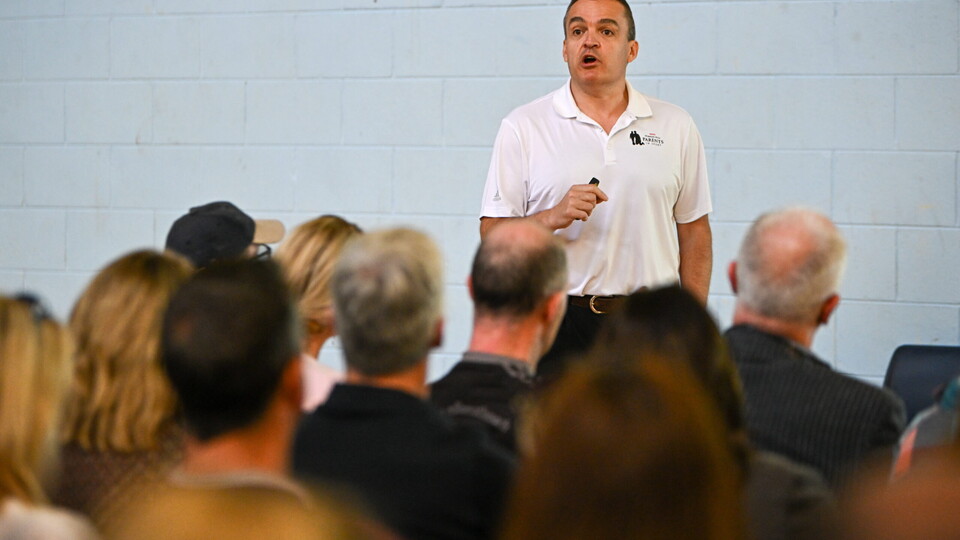
Most recently, Gordon delivered a workshop on behalf of Leinster Rugby at The King’s Hospital in Palmerstown.
“We did an introduction to sports performance parenting for the Under-18 girls,” he said.
“This encapsulated role-modelling, the positives and challenges of being involved in children’s sport and managing dreams and expectations.
“It also revealed the development of key character traits that underpin high performance and how we develop those in our children.
“We talked about avoiding comparisons with other kids, the car journey to and from the competition and how to work with kids to create the best environment for them to reach their potential.
“It comes down to how you develop the character of young people,” says Gordon.
“Even if you want a professional athlete or an Olympic medalist or you simply want your kids to enjoy the experience and build transferable skills that will allow them to thrive in whatever walk of life they go into.
“The reality is the development of traits, like commitment, resilience, humility, good self-organisation, good decision-making and good communication can be passed on by parents.
“We see a lot of kids with a lot of talent across sports, who lack some of those building blocks, understanding why they are winning and being successful.
“We try to get parents to move away from the angle, did you win? Did you score? Were you
the best player?
“If that is the only type of dialogue we have, we miss the bigger experience of bringing those character traits to life.
“We’ve got to talk about them. We’ve got to celebrate them. That is how you equip children with the armoury to thrive in the future”.
You can read more about WWPIS here.