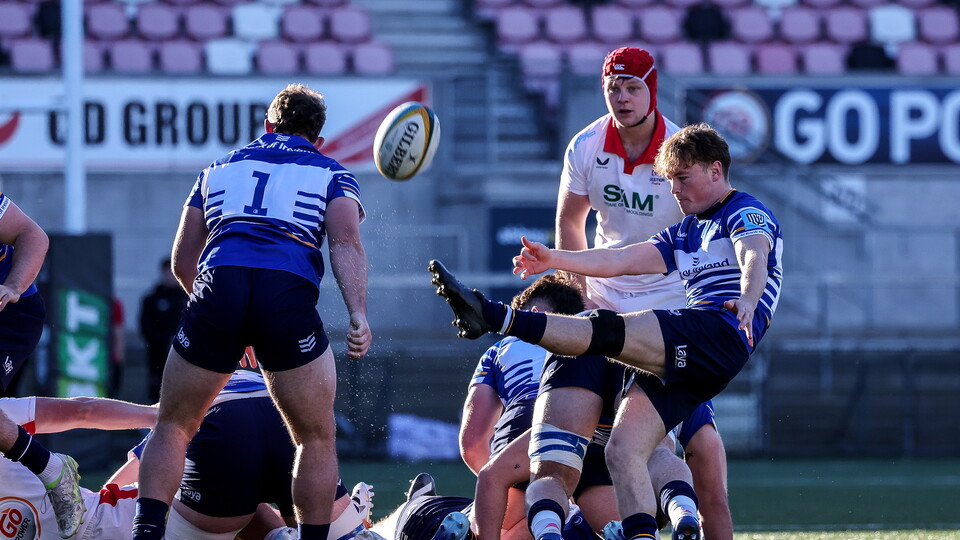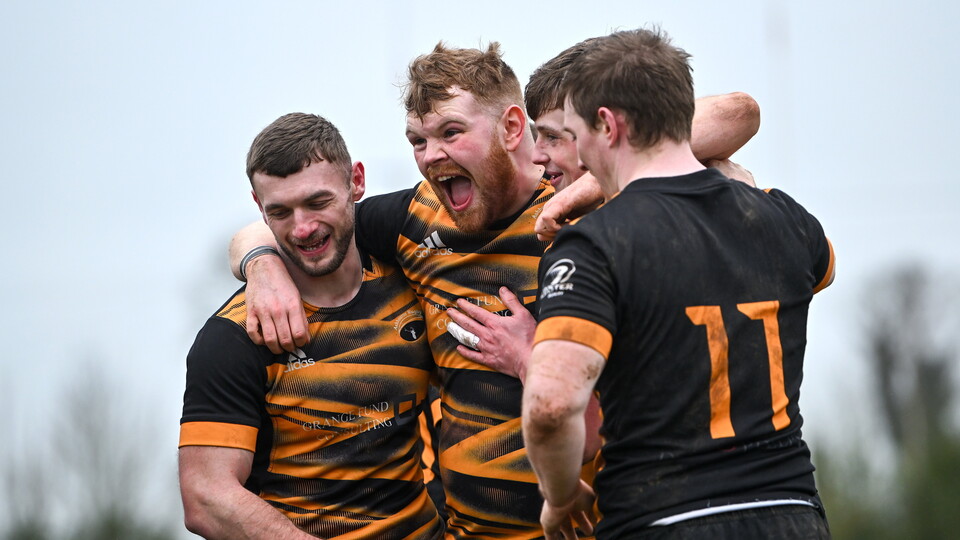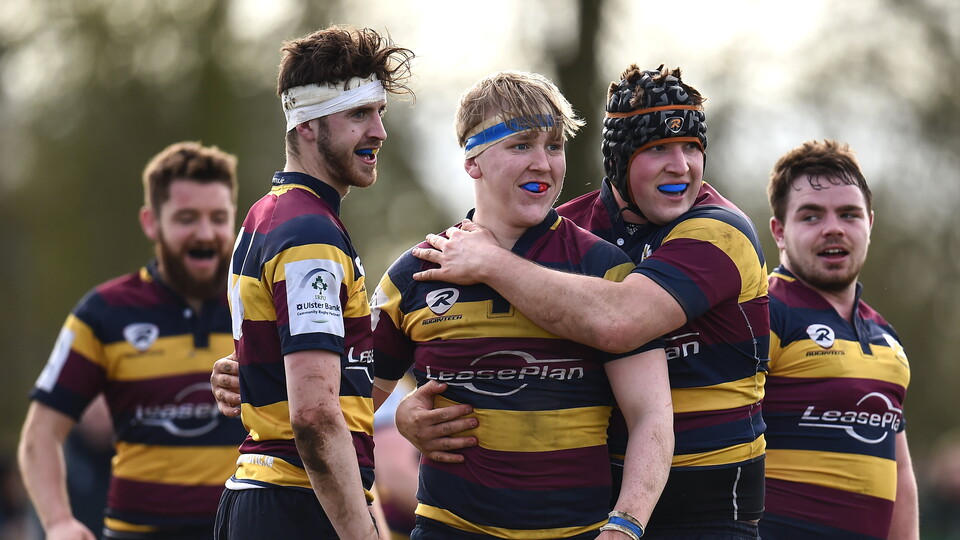
This year marks the 100th Bank of Ireland Provincial Towns Cup, going all the way back to when Enniscorthy were the inaugural winners over County Kildare (now Naas RFC) at Donnybrook (now Energia Park) in 1926.
Enda Finn spent the last nine seasons as Head Coach of the Leinster Juniors. It was a long-term commitment, born out of his love of the game and, more specifically, a love for provincial rugby in Leinster.
The Cill Dara man has never known the magic of making it to the Towns Cup final, with the club falling in the semi-final to Tullow in 2008 and Boyne in 2010.
Finn’s first live experience of the Town Cup final came in 2002, when he travelled to see his friend Eamon Fitzpatrick captain County Carlow in the 33-13 defeat to Kilkenny at North Kildare RFC.
“My first memory is of the occasion, the crowd and what it meant to the people of both clubs. It really was a fantastic day out,” recalls Finn.
Eighteen years on from losing a semi-final to Tullow in Portlaoise, the memory of a late disallowed try by Chris Moore is a vivid reminder of the slim margins between victory and defeat.
“In Cill Dara at the time, the likes of Joe Flanagan, Ger Conway, Paddy White and Andy Fitzpatrick knew what the Towns Cup was all about. They embodied Junior rugby around Kildare,” Finn says.
“You wanted to win it more for them than yourself. Unfortunately, we haven’t managed to do that.”
It hasn’t prevented him from giving his all to the Cill Dara club and those who make it a special place to play and to be.
“I would be passionate about Leinster provincial rugby. It is all about the sense of community,” he says.
“Provincial rugby is deeply embedded in community. So many players start their rugby journey in their local club and play Youth rugby. For those who move on to play Schools rugby, they often come back to the club.
“They might even leave to play in the Energia All-Ireland League. They often return to play with their club because it is, and always will be, their club. That is what I love about it.”
There are those who have struggled for their whole playing career to feel the sun on their faces on Towns' Cup final day.
And then there is Dara McMahon. The only man to captain his club to three Town Cups, which he did in 1971, 1972 and 1979.
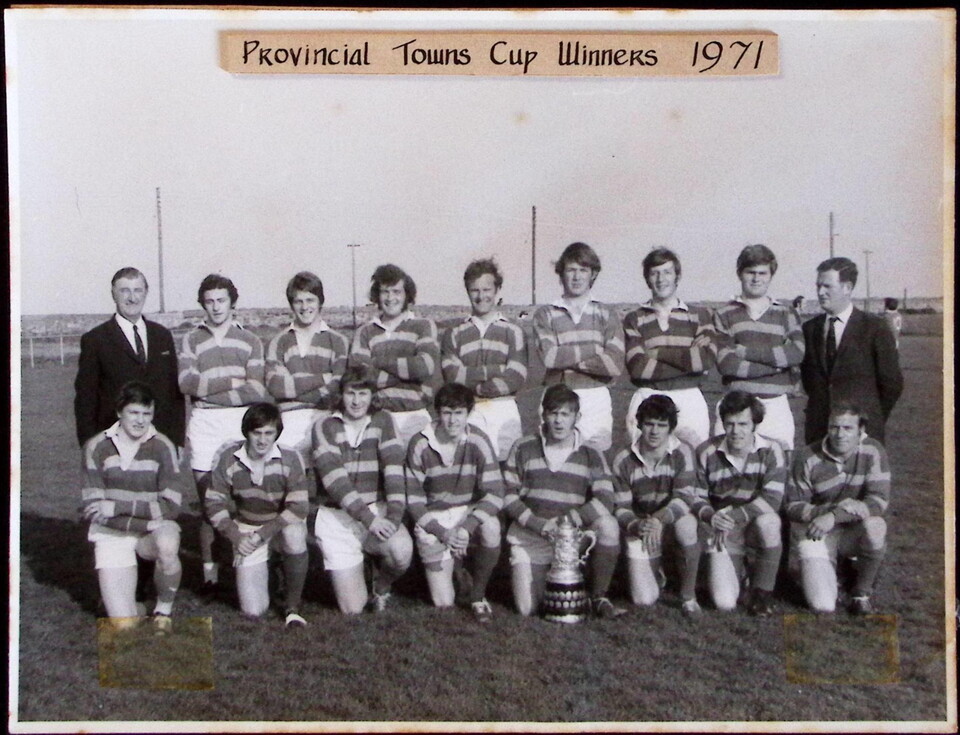
McMahon was also a central figure in Skerries becoming the only club to achieve four-in-a-row, adding titles in 1973 and 1974 when he handed over the captaincy.
He ended his stellar playing career with five Towns Cup medals, joining fellow heroes Des Cashell, Oliver Duff and Paddy O'Shea.
In the beginning, a special band of Skerries brothers came together to play for the club’s U-13 Colts team, building a bond that would be unbreakable.
As many as nine members of that team — David Kinsella, Jim Dempsey, Tim Hegarty, Colm Sherlock, Sean Thornton, Joe Griffin, Jim Gaughran, Paddy O'Shea and McMahon himself — started and savoured Towns Cup glory in 1971.
Skerries took its nickname, the Goats, from a myth that locals stole St Patrick's goat from Church Island and devoured it in a time of need.
That is why a goat joined a marching brass band as part of the build-up to the 1971 final win over Navan (14-6) at the Curragh Camp.
“It meant everything. We were all one. We knew exactly what we had to do,” remembers McMahon.
“We got stuck in for one another. We followed the game plan, did what we were told to do and fought to the end.”
An unprecedented four-in-a-row was captured through wins over Kilkenny (19-6) in 1972, when McMahon led Skerries for the second time, North Kildare (12-11) in 1973 and Arklow (6-3) in 1974.
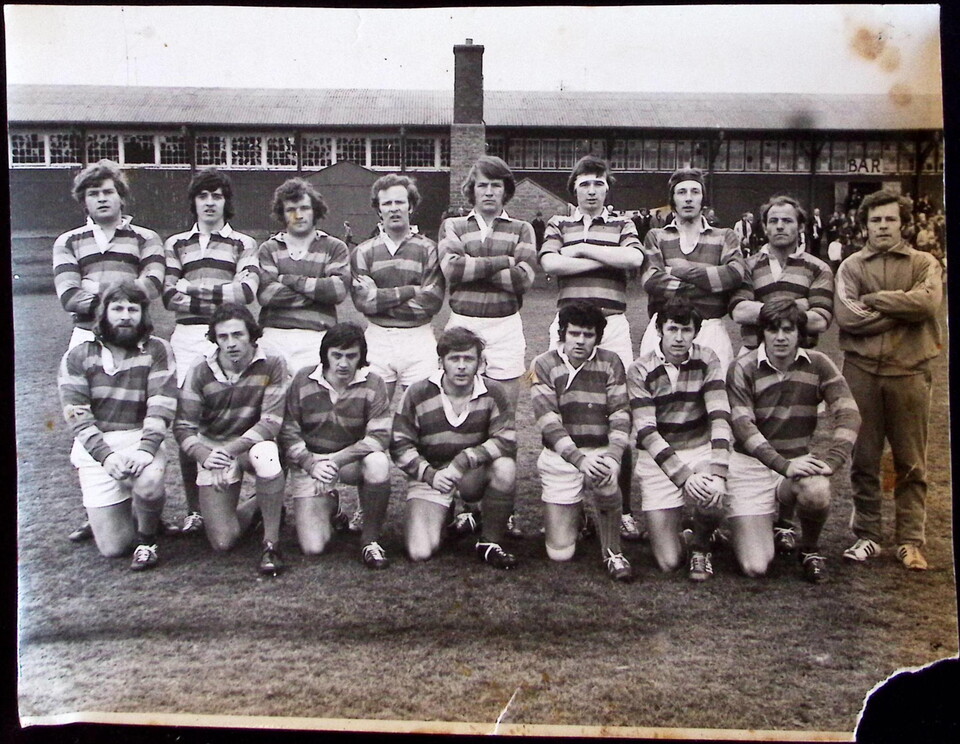
In 1979, McMahon resumed the role of captain towards the end of his career to go where no man had gone before: become the first man to win the Towns Cup three times as a captain.
“I would have been aware that it hadn't been done before. I wanted to have a go at it. That was my plan, even though I didn't tell anyone about it,” he says.
By that time, McMahon and Paddy O'Shea were the only two players left over from the original band of 1971.
“It was different back in those days. The captain had to do everything,” he says.
“There wouldn't have been a coach. It was down to who the captain got to do a job. He had to get people to help out, whether that was coaching the backs or getting players back to play for the year.”
Ultimately, McMahon passed into the history books alone as a five-time winner and three-time winning captain.
“It was, and is, the pinnacle of Provincial Junior Rugby. As champions, you were there to be shot at, which made winning the four in a row all the more memorable,” says McMahon.
“It was special to do those things with fellas you were with from the age of 12 or 13. These fellas are still friends of mine. A lot of us meet at the pre-match lunches for the first team playing in the AIL.”